
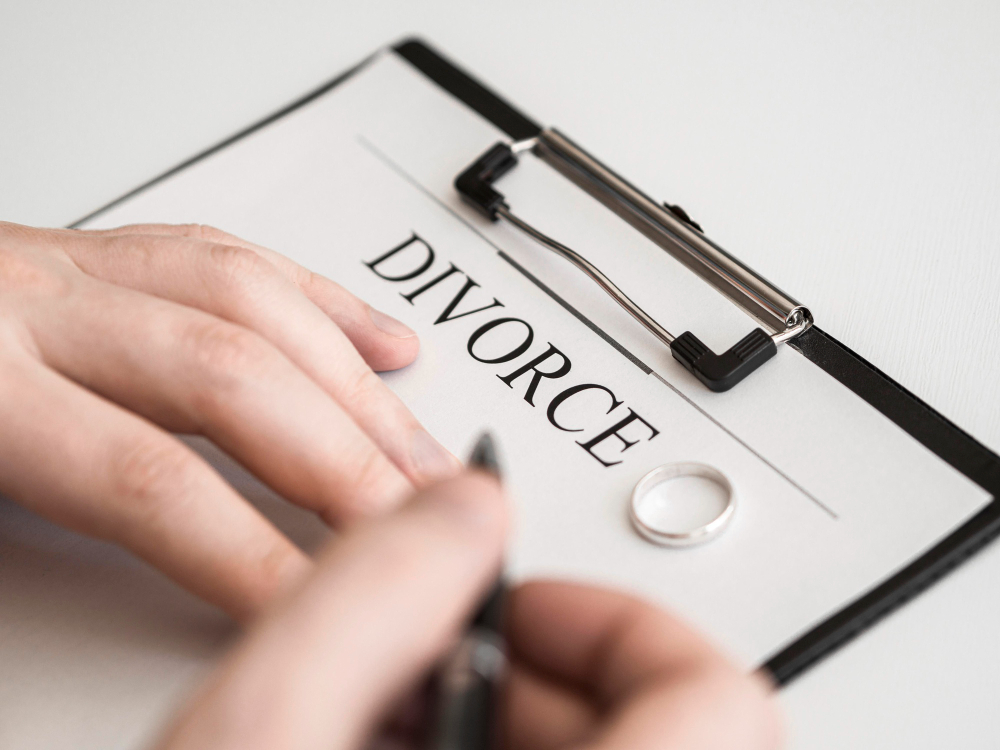
Divorce does not revoke your Will in NSW, but it does change what happens under it. Under section 13 of the Succession Act 2006 (NSW), any gift to your former spouse and any appointment of them as executor, trustee or guardian is automatically revoked once the divorce order is made.
The effect of divorce on a Will catches most people off guard. Not because of what it removes, but because of what it leaves behind. Your Will still exists. It still operates. It still governs how the rest of your estate is distributed. The provisions involving your ex-spouse are struck out. Everything else stays.
That distinction matters more than it might sound, especially if your former spouse was your only beneficiary.
What Happens to a Will After Divorce
Most explanations stop at “the gift is revoked.” That’s technically correct, but it skips the part that actually affects your family.
Under s13 of the Succession Act, when a divorce is finalised, your Will is read as if your former spouse had died before you. They haven’t, obviously. But the law treats the document that way.
So what happens to the gift that was meant for them?
If your Will includes a substitutionary clause, something like “to my spouse, and if my spouse predeceases me, to my children equally,” the gift passes to that next beneficiary. That’s a clean outcome, and it’s the one most professionally drafted Wills anticipate.
But if there’s no substitutionary clause, the gift falls into the residue of the estate. And if the residue clause also names your former spouse, which is common in simple mirror Wills, you may end up with a partial intestacy. That means part of your estate is distributed not according to your Will, but under the intestacy rules in Chapter 4 of the Succession Act.
That’s rarely what anyone intended.
[Note for publishing: confirm current s13(2) wording with the supervising solicitor before this goes live.]
What If Your Ex Was Your Only Beneficiary and Executor?
This is where the consequences stop being abstract.
After their wedding, Sarah and Tom had simple mirror Wills prepared. Each left everything to the other. Each appointed the other as sole executor. They separated five years later and eventually divorced. Neither updated their Will.
Tom passed away six months after the divorce was finalised.
Under s13, Tom’s Will is now read as if Sarah had died before him. His gift to her, the whole estate, is revoked. Her appointment as executor is revoked. But Tom hadn’t named a substitute for either role.
The result: no named beneficiary. No executor. The estate passes under the rules of intestacy, which, depending on Tom’s circumstances, may direct everything to his children, his parents, or other relatives in an order he never chose. And before any of that can happen, someone in the family needs to apply to the Supreme Court of NSW for Letters of Administration with the Will Annexed.
That process takes time, costs money, and lands on the family at the worst possible moment. A short conversation with a solicitor after the divorce would have prevented it entirely.
(Names and details have been changed. This is a composite scenario based on common fact patterns, not a real matter.)
Revocation Happens at Divorce, Not Separation
A point that gets implied in estate planning advice but rarely stated directly: the revocation under s13 takes effect when the divorce order is made. Not when you separate. Not when you file. Not when you reach a property settlement.
If you’ve separated but haven’t obtained a divorce, your Will operates exactly as written. Every gift, every appointment, all of it stands.
This matters because separation in Australia typically involves a minimum twelve-month period before you can apply for divorce under the Family Law Act 1975. During that window, if something happens to you, your estranged partner may still inherit under your Will and may still be appointed as your executor.
The Succession Act does not contain any provisions that revoke or modify a Will on the basis of separation alone, not for married couples, and not for de facto partners.
If that’s not what you want, don’t wait for the divorce to come through. Update your Will as soon as your circumstances change.
Is a Will Still Valid After Divorce?
Yes. Your Will remains a valid legal document after divorce. It continues to control how your estate is distributed, with the specific exception of provisions relating to your former spouse.
The question of whether a Will is still valid after divorce comes up constantly, and the answer is more layered than a simple yes. The Will itself hasn’t been cancelled. It hasn’t been voided. What’s happened is that particular provisions, the gifts to your ex-spouse, their appointment as executor or trustee, are treated as though they were never there.
If those provisions were the only substantive parts of your Will, the practical effect can feel as though the whole document has been revoked. Legally, it hasn’t been. And that gap between how it feels and how the law works is exactly why updating your Will after divorce matters. In many cases, it’s the only way to make sure your estate ends up where you actually want it to go.
Divorce Doesn’t Revoke a Binding Death Benefit Nomination on Your Super
This is one of the most commonly overlooked consequences of divorce, and it sits entirely outside your Will.
Your superannuation is not part of your estate unless it’s paid to your legal personal representative. Most people direct their super through a binding death benefit nomination lodged with their fund. That nomination tells the fund who receives the benefit when you die.
The problem: divorce revokes a gift in your Will under the Succession Act, but it does not automatically revoke a binding death benefit nomination. They’re governed by different legislation entirely. Your super fund isn’t reading your Will. It’s following the nomination you lodged with them, and if your former spouse is still on it, they can receive your death benefit. After the divorce. After the property settlement. After you’ve removed them from everything else.
If you’ve separated or divorced, contact your super fund and check your current nomination. It’s a standalone document. It needs to be updated separately.
Updating Your Will After Divorce: What to Do
Divorce affects inheritance under a Will in ways that aren’t always visible at first glance. Once the divorce is finalised, these are the steps worth taking seriously.
Review your Will, or make a new one. Even though s13 has removed the provisions relating to your former spouse, the rest of your Will may no longer reflect what you want. A new Will is usually cleaner than a codicil, particularly after a significant life change.
Appoint a new executor. If your former spouse held this role, the appointment has been revoked by operation of law. Name someone you trust and have a conversation with them about what the role involves. It’s more than a formality.
Think about guardianship. If you have children under 18, your Will is the document that nominates a guardian in the event something happens to both parents. After a divorce, this deserves a careful, deliberate decision, not a default.
Update your super nomination. As covered above, this sits outside your Will and won’t change on its own.
Check your power of attorney and enduring guardian appointments. If your former spouse was appointed under either of these documents, those appointments may still be active. Whether they are depends on the instrument and when it was made. Your solicitor can confirm.
Don’t assume a property settlement covers your estate planning. A property settlement deals with the division of assets between you and your former spouse. It doesn’t touch your Will, your super nominations, or your powers of attorney. These are separate instruments that need separate attention.
This article provides general information about the law in New South Wales. It is not legal advice and should not be relied on as a substitute for advice about your specific situation. To discuss how divorce or separation may affect your Will, contact us on 02 4944 2008 or book a confidential consultation.
Frequently Asked Questions
Does divorce revoke a Will in NSW?
No. Divorce does not revoke your entire Will. Under s13 of the Succession Act 2006 (NSW), it revokes the gifts, appointments and powers of appointment relating to your former spouse. The rest of the Will continues to operate.
Is a Will still valid after a divorce?
Yes. Your Will remains valid. The provisions relating to your former spouse are read out of the document, but the Will itself is not cancelled or voided.
What happens if I die without updating my Will after a divorce?
The gifts to your former spouse are revoked by operation of law. But if your Will doesn’t name substitute beneficiaries, the affected portion of your estate may pass under the intestacy rules in Chapter 4 of the Succession Act, which may not reflect your wishes.
Does separation revoke a Will in NSW?
No. Separation has no effect on your Will in NSW. All gifts and appointments remain in place until either a divorce order is made or you update your Will yourself.
Does divorce revoke a binding death benefit nomination on my super?
No. A binding death benefit nomination is governed by superannuation law, not the Succession Act. If your former spouse is still named on the nomination, they may receive your death benefit even after the divorce. You need to update this directly with your super fund.
Does an annulment or overseas divorce affect a Will in NSW?
An annulment is treated similarly to divorce under s13 of the Succession Act. For overseas divorces, the position depends on whether the divorce is recognised under Australian law. If it is, the same revocation provisions typically apply. If there’s any doubt, particularly with divorces obtained in jurisdictions with very different legal systems, this is worth confirming with your solicitor.